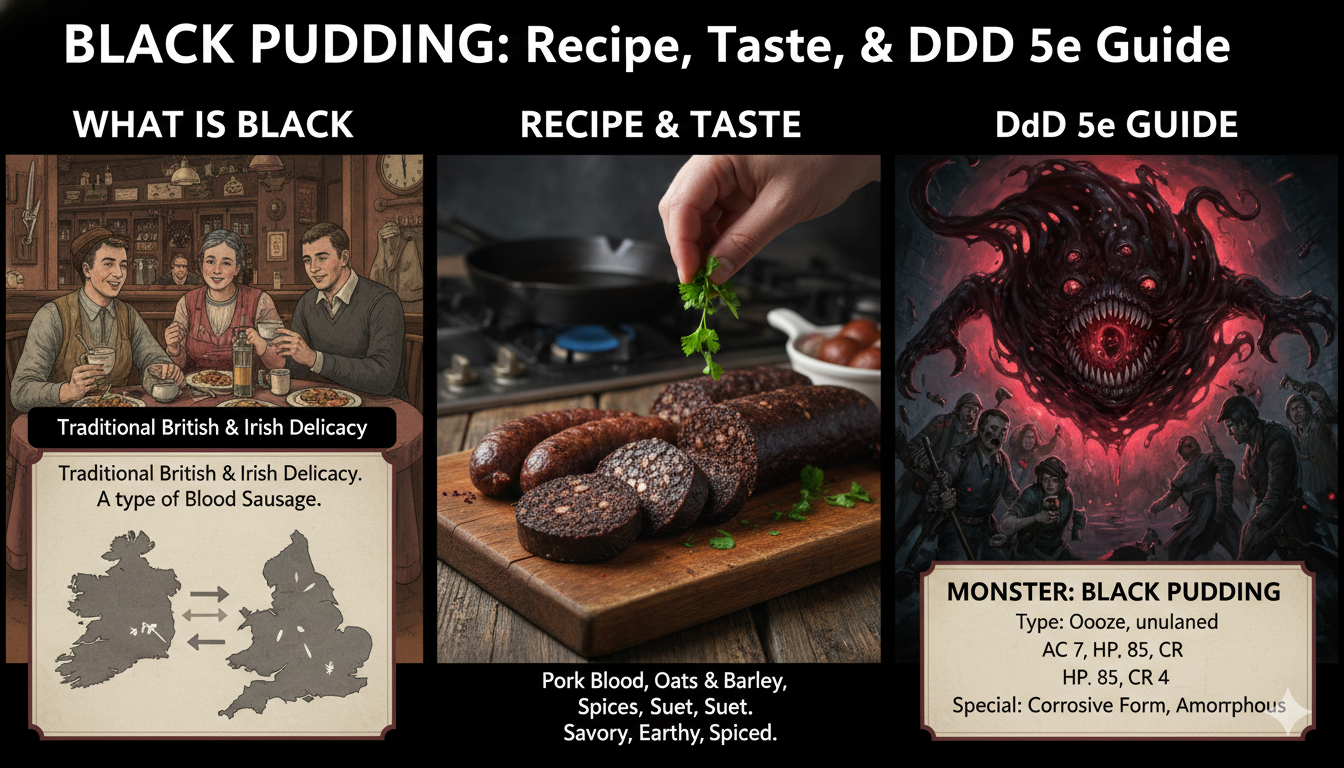
What is Black Pudding? Recipe, Taste, and D&D 5e Guide
black pudding you ever heard of a food that sounds like a sweet dessert but is actually a savory sausage? That is exactly what we are looking at today. This unique food has a long history and a very strong following around the world. Some people love it on their breakfast plate, while tabletop gamers know it as a scary monster that melts armor.
We are going to dive deep into this fascinating topic. We will cover the kitchen version and the fantasy gaming version. By the end of this guide, you will know everything from the traditional kitchen ingredients to surviving a dungeon encounter. Let us get started on this fun journey together.
What is Black Pudding?
When you hear the word pudding, you might think of a sweet chocolate treat. However, black pudding is actually a traditional type of blood sausage. People in the United Kingdom and Ireland have been eating it for hundreds of years. It is a deeply savory food that usually looks like a dark, thick log before it is sliced into round discs.
This food is a major part of local culture. It is not something you eat with a spoon out of a plastic cup. Instead, people slice it up and fry it until the edges get nice and crispy. It is most famous for being a star item in a traditional full breakfast layout.
What is Black Pudding Made Of?
If you are wondering what is black pudding made of, the answer might surprise you. The primary item used to make it is animal blood, usually from pigs. Before that makes you feel uneasy, remember that using every part of the animal is an ancient, respectful way of cooking.
The blood is mixed with fat and a grain like oatmeal or barley to give it structure. Bakers and butchers then add a special blend of herbs and spices. This mixture is stuffed into a casing and boiled so it becomes solid and safe to keep.
Essential Black Pudding Ingredients
Every butcher has a secret family recipe, but the basic black pudding ingredients stay mostly the same across the globe. The grains used are very important because they absorb the liquids and create a pleasant texture. Oatmeal gives it a nice, nutty bite that people really enjoy.
Here is a quick look at the main components you will find inside a standard roll:
- Fresh pig or cattle blood
- Pork fat or suet
- Oatmeal, oat groats, or pearl barley
- Onions
- Spices like pennyroyal, mace, allspice, and pepper
What Does Black Pudding Taste Like?
It is completely normal to wonder what does black pudding taste like before you try it. Many people expect it to taste metallic or strange, but it actually tastes very rich and deeply savory. The flavor is a mix of warm spices, earthy grains, and rich pork fat.
The texture is also a big part of the experience. When you fry a slice, the outside gets remarkably crunchy while the inside stays soft and crumbly. It tastes a lot like a highly seasoned, thick sausage with a nutty background from the oats.
The Tradition of Irish Black Pudding
If you ever travel to Dublin or Galway, you will definitely see irish black pudding on the menu. The Irish take their breakfast very seriously, and this regional version is world-famous. It is known for having a slightly higher amount of oats and a wonderful blend of local spices.
In Ireland, it is an essential piece of the famous “Full Irish” breakfast. It sits proudly next to eggs, bacon, and soda bread. Many Irish chefs today even crumble it over salads or use it to stuff chicken breasts for fancy dinner meals.
A Simple Home Black Pudding Recipe
Making this food completely from scratch at home can be tough because finding fresh blood is hard. However, a modern black pudding recipe often uses dried blood powder instead. This makes the whole process much easier and cleaner for home cooks to try out in their kitchens.
Homemade Sausage Biography & Specs
| Detail Type | Specification Data |
| Prep Time | 30 minutes |
| Cook Time | 1 hour |
| Main Base | Dried blood powder + water |
| Texture Style | Crumbly and hearty |
| Best Cooking Method | Pan frying in butter |
To make it, you mix the powder with warm water, then stir in cooked oatmeal, minced onions, and diced pork fat. You season it heavily with salt, pepper, and allspice. Finally, you pour the mix into a baking tin and bake it in a water bath until it sets completely solid.
Introducing the D&D Black Pudding
Now, let us flip the coin and talk about a completely different kind of monster. In the world of tabletop roleplaying games, the d&d black pudding is not a breakfast food at all. It is a terrifying, mindless monster that lives deep underground in dark caves.
This creature belongs to a family of monsters called oozes. It looks like a giant, bubbling puddle of black sludge moving across the floor. It can climb walls and squeeze through tiny cracks, making it a nightmare for unsuspecting adventurers exploring a dungeon.
Understanding Black Pudding 5e Mechanics
If you play Dungeons and Dragons, you need to know the specific black pudding 5e rules. This monster has a Challenge Rating of 4, which means it can easily wipe out a group of low-level players. It moves very slowly, but it has a lot of health points to burn through.
The scariest part about this creature is its acid damage. Anything that touches the ooze starts to melt away. If a fighter hits it with a sword, the acid can permanently damage their weapon, lowering its effectiveness until it is completely destroyed.
Traits of the D&D Black Pudding Monster
The black pudding monster has a unique trait called Corrosive Form. Any creature that hits it with a melee attack from close range takes acid damage instantly. It also has a feature called Amorphous, which lets it slide through spaces that are only an inch wide.
Combat Warning: Never hit this monster with lightning or slashing damage! Doing so activates its Split trait, which turns the single creature into two perfectly healthy, smaller oozes.
How to Defeat the Ooze in Your Game
Defeating this bubbling threat requires strategy rather than raw physical power. Since slashing weapons split the monster, fighters should switch to bludgeoning weapons like clubs or warhammers. These weapons allow you to crush the ooze without multiplying the danger.
Fire damage is also an amazing tool to use against it. The monster is not resistant to flames, so spells like Fire Bolt or Fireball work perfectly. Keep your distance, use ranged magic, and avoid letting your metal armor touch its acidic body.
Conclusion
Whether you are looking at a classic breakfast plate or rolling dice with friends, this unique name carries a lot of history. The edible version is a delicious, iron-rich treat that rewards adventurous eaters with its deep, spiced flavors. On the gaming side, it remains one of the most iconic obstacles a dungeon master can throw at a party.
Are you ready to take your next step? You could visit a local international market to pick up a slice for breakfast, or update your gaming notes for your next weekend session. Whichever path you choose, you now have all the expert knowledge you need to enjoy the experience!
FAQs
Is black pudding good for your health?
Yes, it is very high in iron and protein. It also contains good amounts of zinc and potassium. However, it can be high in calories and salt, so it is best enjoyed as a balanced part of a meal.
Can you eat black pudding raw?
Most store-bought logs are already fully boiled and cooked by the butcher before they are packaged. This means you can technically eat it straight from the package, but pan-frying it tastes much better.
Why is it called a pudding?
The word comes from an old French word, “boudin,” which means small sausage. Over time in Britain, the word morphed into pudding, used for both savory meat skins and sweet desserts.
Does the D&D monster have any weaknesses?
It does not have a specific damage vulnerability, but it is completely blind. It relies on blindsight to find targets, so it cannot see you if you are far away or hiding behind solid walls.
Can a black pudding climb ceilings?
Yes, it has a special feature called Spider Climb. This allows the ooze to climb difficult surfaces, including upside down on ceilings, without needing to make any ability checks.
How do you store the food version?
You should keep it wrapped tightly in the refrigerator and eat it within a few days of opening. If you cannot finish it all, you can slice it up and freeze the discs for up to three months.